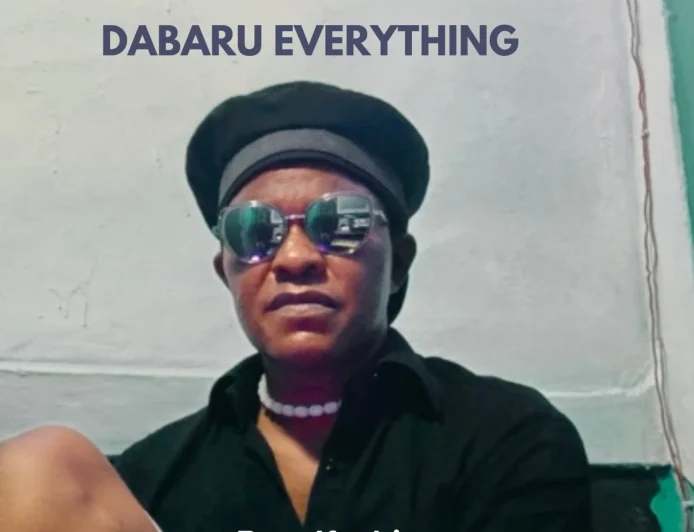


























Rest Ifechi’s latest single, Dabaru Everything, emerges as a poignant anthem within the contemporary Afrobeat scene, capturing both the vibrancy of the genre and the stark realities of modern Nigerian society. Afrobeat has long been a vessel for social commentary—from Fela Kuti’s revolutionary messages to Burna Boy’s modern explorations of identity and injustice—and Dabaru Everything continues this lineage with a raw, unflinching perspective. The song does more than entertain; it interrogates the power dynamics that shape everyday life in Nigeria, particularly the persistent disconnect between the ruling elite and the common citizenry.

Advertisement 👇
At its core, Dabaru Everything is an audacious critique of governance and societal structures. The phrase “dabaru everything” itself is laden with nuance. In Nigerian Pidgin English, “dabaru” conveys a sense of total domination or monopolization—essentially, the idea that someone is taking control over all resources or opportunities, leaving others in a state of deprivation or frustration. In the song, Rest Ifechi harnesses this phrase to highlight the recurring pattern where the political and economic elites seize the lion’s share of wealth, influence, and decision-making power, while the ordinary people remain marginalized. Every beat, lyric, and cadence serves to reinforce this social commentary, making the track both musically infectious and intellectually provocative.
Musically, the song thrives within Afrobeat’s signature characteristics—polyrhythmic percussion, syncopated grooves, and layered instrumental textures—but Rest Ifechi injects a modern flair that appeals to younger audiences without diluting the genre’s historical weight. The rhythm is both danceable and defiant, echoing the dual nature of Afrobeat itself: it is celebratory, yet it carries a subversive undertone. This juxtaposition mirrors the lived experience of many Nigerians—moments of joy and cultural pride interspersed with frustration at systemic inequities. The song’s tempo and melody create a sense of urgency, propelling the listener forward even as the lyrics lay bare social realities.
Lyrically, Dabaru Everything is sharply incisive. Rest Ifechi addresses the lived frustrations of the Nigerian populace: unreliable infrastructure, economic instability, corruption, and political apathy. He paints vivid scenes of a society where the masses toil endlessly yet remain excluded from the decision-making processes that affect their lives. The rulers, in contrast, are depicted as thriving within a cycle that favors self-interest and perpetuates inequality. Through metaphor, repetition, and evocative imagery, Rest Ifechi ensures that his message resonates on both a personal and collective level. The chorus—anchored around the phrase “dabaru everything”—serves as a rallying cry, a declaration that the imbalance is total and that the system is skewed in favor of the few.
Beyond the critique, the song carries a subtle emotional weight. There is a sense of melancholy intertwined with resilience, reflecting the lived experience of many Nigerians who endure hardship with courage and creativity. Rest Ifechi captures the paradox of hope amid struggle: even as the elites “dabaru everything,” the spirit of the people persists, finding expression in music, art, and community. This emotional depth distinguishes Dabaru Everything from mere protest music—it is both a lament and a celebration of endurance, a musical embodiment of collective consciousness.
The cultural significance of the song is equally compelling. Nigeria has long been fertile ground for music that interrogates politics and society. From Fela Kuti’s scathing critiques in the 1970s to contemporary Afrobeat artists tackling modern inequities, music has served as both entertainment and activism. In this lineage, Rest Ifechi’s Dabaru Everything stands out for its contemporary relevance, reflecting not only the frustrations of the present generation but also the enduring structural patterns that continue to shape Nigerian life. The song resonates beyond national borders, speaking to global audiences familiar with systemic inequity, urban struggle, and the tension between power and accountability.
Moreover, Dabaru Everything is a testament to the transformative potential of music in society. It invites listeners to think critically about governance, inequality, and their own role within the system. It encourages dialogue, reflection, and perhaps even action. By combining catchy rhythms with potent messaging, Rest Ifechi ensures that his social commentary reaches both casual listeners and those attuned to the deeper political undercurrents of his lyrics.
In conclusion, Rest Ifechi’s Dabaru Everything is more than an Afrobeat track; it is a culturally resonant statement about inequality, power, and the enduring struggle of the Nigerian masses. It successfully blends musical sophistication with meaningful social critique, creating a song that is as danceable as it is thought-provoking. In a society where the rulers continue to consolidate wealth and influence, Dabaru Everything stands as both a mirror and a megaphone—reflecting the realities of everyday life while amplifying the voices of those often overlooked. Rest Ifechi reminds us, with infectious rhythm and sharp lyricism, that music remains one of the most powerful tools for awareness, resistance, and ultimately, change.