














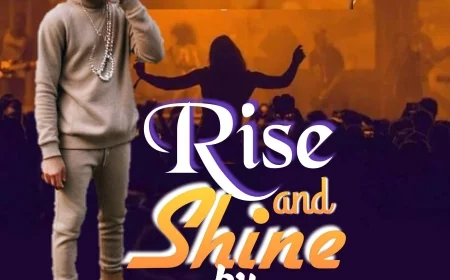











Happy Time by Skyblu is a deeply personal and expressive record that captures a moment of pure emotional freedom. It’s not just about being happy on the surface—it’s about reaching a point in life where your happiness becomes your priority, regardless of how others perceive you. When I created this song, I was in a space where I had let go of a lot of pressure, expectations, and noise from the outside world. I wanted to reflect that feeling in a way that people could both vibe to and connect with on a deeper level.
The idea behind “Happy Time” is simple, but powerful: happiness is a choice, and sometimes choosing happiness means accepting that not everyone will understand you. There’s a line in the song where I express that I don’t even mind if someone calls me a fool or “mugu.” That wasn’t just for effect—it was real. In many places, being called a “mugu” implies that you’re naive or too soft, especially if you’re not playing the same game as everyone else. But what if stepping away from negativity, drama, or unnecessary competition is actually strength, not weakness?
Advertisement 👇
That’s the space I was speaking from. I’ve come to realize that a lot of people are stuck trying to impress others, trying to prove a point, or trying to meet standards that don’t even bring them peace. “Happy Time” is me breaking away from that cycle. It’s me saying: I choose joy, even if it looks strange to you. I choose peace, even if it makes you question me.
There’s also a level of confidence in that decision. It takes confidence to be misunderstood and still remain grounded. When I say I don’t mind being called names, it’s not because I lack awareness—it’s because I’ve found something more important than validation. I’ve found a sense of inner satisfaction that can’t be shaken by opinions. That’s what I want listeners to feel when they hear this song.
Musically, I wanted “Happy Time” to feel light, energetic, and free. The rhythm carries a certain bounce that naturally lifts your mood, and that’s intentional. The production complements the message—it’s not heavy or aggressive, but smooth and uplifting. I wanted the beat to feel like a release, like something you can move to without thinking too hard, while the lyrics quietly speak to your mind.
Another layer of the song is self-acceptance. We live in a world where people are constantly judged—how you act, how you speak, what you enjoy. Over time, that pressure can make you hide parts of yourself just to fit in. But in “Happy Time,” I’m embracing everything that makes me feel good, even if it doesn’t align with someone else’s expectations. That’s where true happiness begins—when you stop editing yourself for other people.
There’s also a subtle message about growth. The happiness I’m talking about didn’t just appear out of nowhere. It came from experiences, from challenges, from moments where I had to choose between staying stuck or moving forward. So when I say I’m happy now, that “now” is important. It shows that happiness can be a destination after a journey—it’s something you arrive at after learning, healing, and letting go.
I also wanted the song to feel relatable across different kinds of listeners. Whether you’re someone who has been through stress, heartbreak, pressure, or even just everyday struggles, there’s something in “Happy Time” for you. It’s a reminder that you’re allowed to feel good. You’re allowed to enjoy your life without constantly explaining yourself.

At the same time, I’m not saying people should ignore reality or avoid responsibility. It’s not about being careless—it’s about being intentional with your peace. There’s a difference between being a “mugu” in the negative sense and simply choosing not to engage in things that drain you. In this song, I’m redefining that idea. If protecting my happiness makes me look like a fool to someone else, then I’m okay with that.
“Happy Time” is also about presence—being in the moment and appreciating it. Sometimes we’re so focused on what’s next that we forget to enjoy what’s now. This track is like a pause button, a reminder to celebrate the present, no matter how small the wins might seem.
In the end, this song is an expression of freedom. Freedom from judgment, from pressure, from the need to constantly prove something. It’s me standing in my own space and saying: this is how I feel, and I’m not apologizing for it.
So when you listen to “Happy Time,” I want you to do more than just hear it—I want you to feel it. I want you to let go, even if it’s just for a few minutes. Dance, smile, relax, and most importantly, give yourself permission to be happy on your own terms.
Because real happiness isn’t about what people call you—it’s about how you feel within yourself.