![Not All Dogs Has Poison To Kill Human [See Why]](https://spotivik.com/uploads/images/202603/image_430x256_69a4508618909.webp)


















![Richinfaith - Baba Show Me the Way [feat. Romke]](https://spotivik.com/uploads/images/202603/image_430x256_69aa9677bd30b.webp)























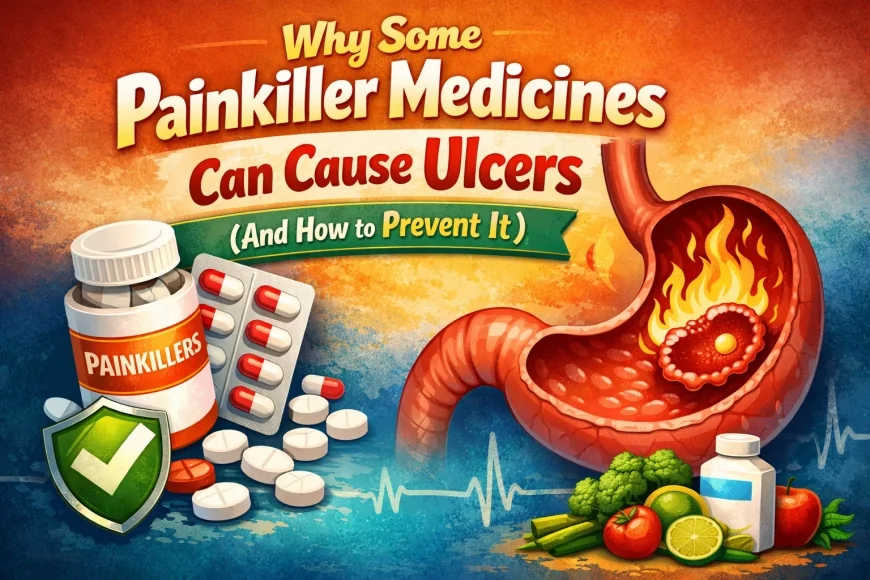
Why Some Painkiller Medicines Can Cause Ulcers (And How to Prevent It)
Why Some Painkiller Medicines Can Cause Ulcers (And How to Prevent It) in Nigeria, this is well organized article that show common mistake we make daily and solutions to it.
Share To Your Friends👇

How Much Does It Cost to Promote a Song in Nigeria? (Up...
Cost of music promotion in Nigeria explained for 2026. Discover how much it cost...
A headache hits mid-workday, your back tightens after a long drive, or cramps show up right on schedule. It's so easy to reach for an over-the-counter painkiller and move on.
But some common pain medicines can irritate your stomach and, in some people, lead to an ulcer. An ulcer is an open sore in the stomach or the first part of the small intestine (the duodenum). Think of it like a raw spot where the protective lining has been worn down.

What makes this tricky is that some ulcers are "silent." They can grow for weeks without obvious pain, then show up as bleeding. Below, you'll learn which painkillers raise ulcer risk, why it happens, who's most at risk, warning signs to take seriously, and safer ways to manage pain.
The real reason some painkillers can cause an ulcer
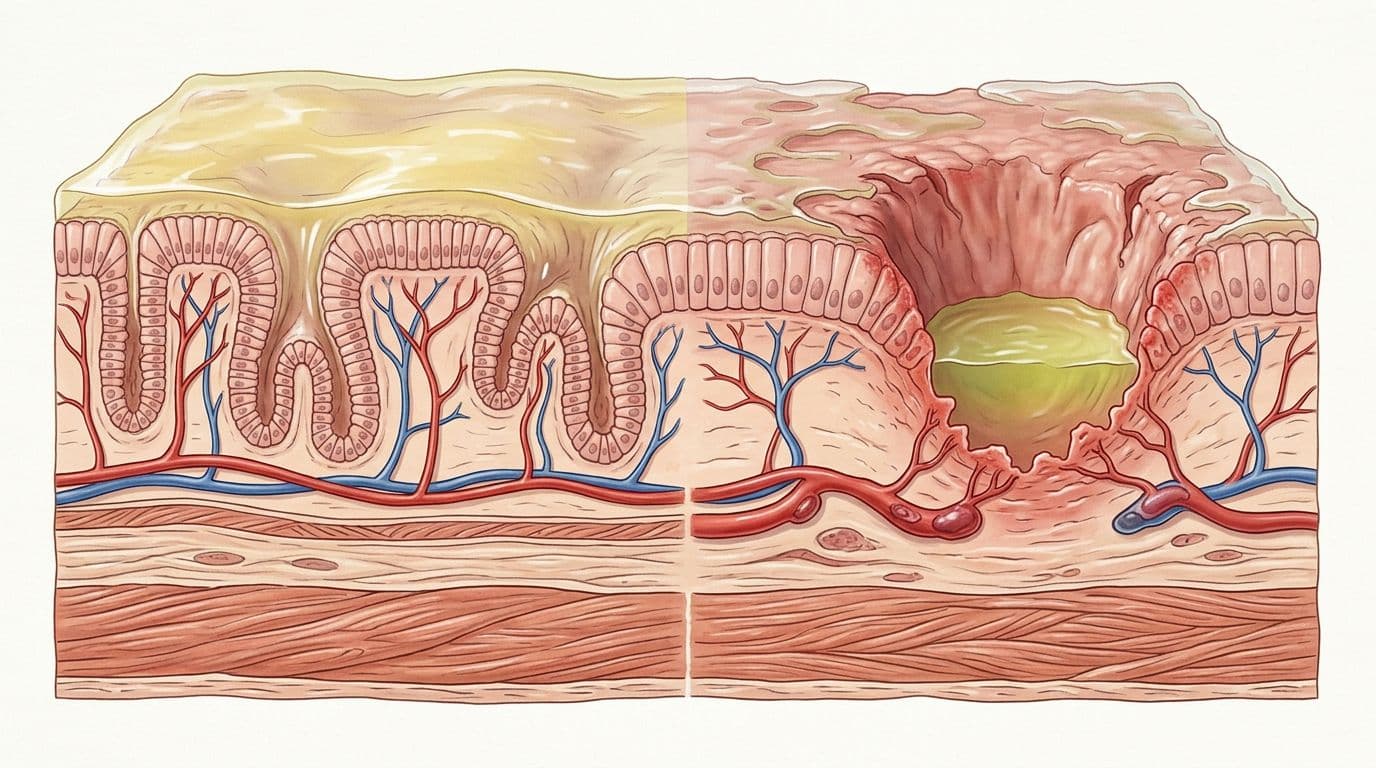 Healthy stomach lining vs. an ulcer forming where protection thins, created with AI.
Pain relief can feel simple, but the stomach is a little like a cast-iron pan. It needs its "seasoning" layer to handle harsh conditions. Some painkillers strip that layer away.
NSAIDs lower your stomach's natural protection
The biggest group linked to ulcers is NSAIDs (nonsteroidal anti-inflammatory drugs). This includes aspirin, ibuprofen, and naproxen.
NSAIDs work by blocking COX enzymes, especially COX-1. That lowers prostaglandins, which your body uses to protect the stomach lining. In plain terms, prostaglandins help your stomach:
- make protective mucus and bicarbonate (a buffer),
- keep good blood flow for repair,
- heal small injuries before they turn into bigger ones.
When prostaglandins drop, stomach acid has an easier time irritating the tissue. First, it may cause gastritis (inflammation). Next, it can create erosions. Over time, that damage can become an ulcer, and sometimes a bleeding ulcer.
Dose and time matter. Higher doses and longer use raise risk, even when the medicine helps your pain. For a plain-language overview of NSAID side effects and safer use, see this patient guide to NSAIDs.
Some painkillers are higher risk, and "low dose aspirin" still counts
Not all painkillers affect the stomach the same way.
Aspirin can irritate the stomach lining, and daily "low dose aspirin" for heart protection still counts as an NSAID exposure. Ibuprofen is often considered a bit gentler than some NSAIDs at typical doses, but it can still cause ulcers. Naproxen is commonly linked with a higher rate of stomach and intestinal injury, especially with regular use.
On the other hand, acetaminophen (Tylenol) is not an NSAID. It usually doesn't cause ulcers through the same stomach-lining pathway. However, it has its own serious risk if overused, especially liver damage.
One more important point: mixing NSAIDs stacks the harm. Taking ibuprofen and naproxen together (or combining an NSAID with aspirin unless a clinician told you to) increases the chance of stomach injury and bleeding.
Who gets ulcers from pain medicine most often, and what symptoms to watch for
 Mild upper belly discomfort is easy to dismiss, created with AI.
Some people can take NSAIDs for a short time and feel fine. Others develop problems quickly. Studies and clinical guidance consistently show the risk rises with certain health factors and medication combinations. In long-term users, ulcer injury is not rare.
Risk factors that make NSAID ulcers more likely
Your risk goes up if you have one factor, and it rises even more as factors add up. The biggest ones include:
- Age over 65
- Past ulcer or past GI bleeding
- H. pylori infection (a common stomach bacteria tied to ulcers)
- High-dose or long-term daily NSAID use
- More than one NSAID at the same time
- NSAIDs combined with steroids (like prednisone), blood thinners, antiplatelet drugs, or SSRIs (some antidepressants), all of which can increase bleeding risk
Smoking, heavy alcohol use, kidney disease, and poor overall health can also make complications more likely.
The simple rule: the more risk factors you have, the more you should talk with a clinician or pharmacist before using NSAIDs often.
If you want to see how gastroenterology experts group risk and prevention options, review the American College of Gastroenterology guidance on preventing NSAID-related ulcers.
Symptoms can be mild, or there may be no warning until bleeding starts
Ulcer symptoms can feel like everyday indigestion: burning upper stomach pain, nausea, bloating, heartburn, or getting full fast. Still, many ulcers cause little or no pain.
Seek urgent care right away if you notice:
- Black, tarry stools
- Vomiting blood or vomit that looks like coffee grounds
- Sudden, severe belly pain
- Fainting, unusual weakness, or shortness of breath (possible bleeding)
Don't "push through" these signs. Bleeding can become dangerous fast.
How to prevent an ulcer when you need pain relief
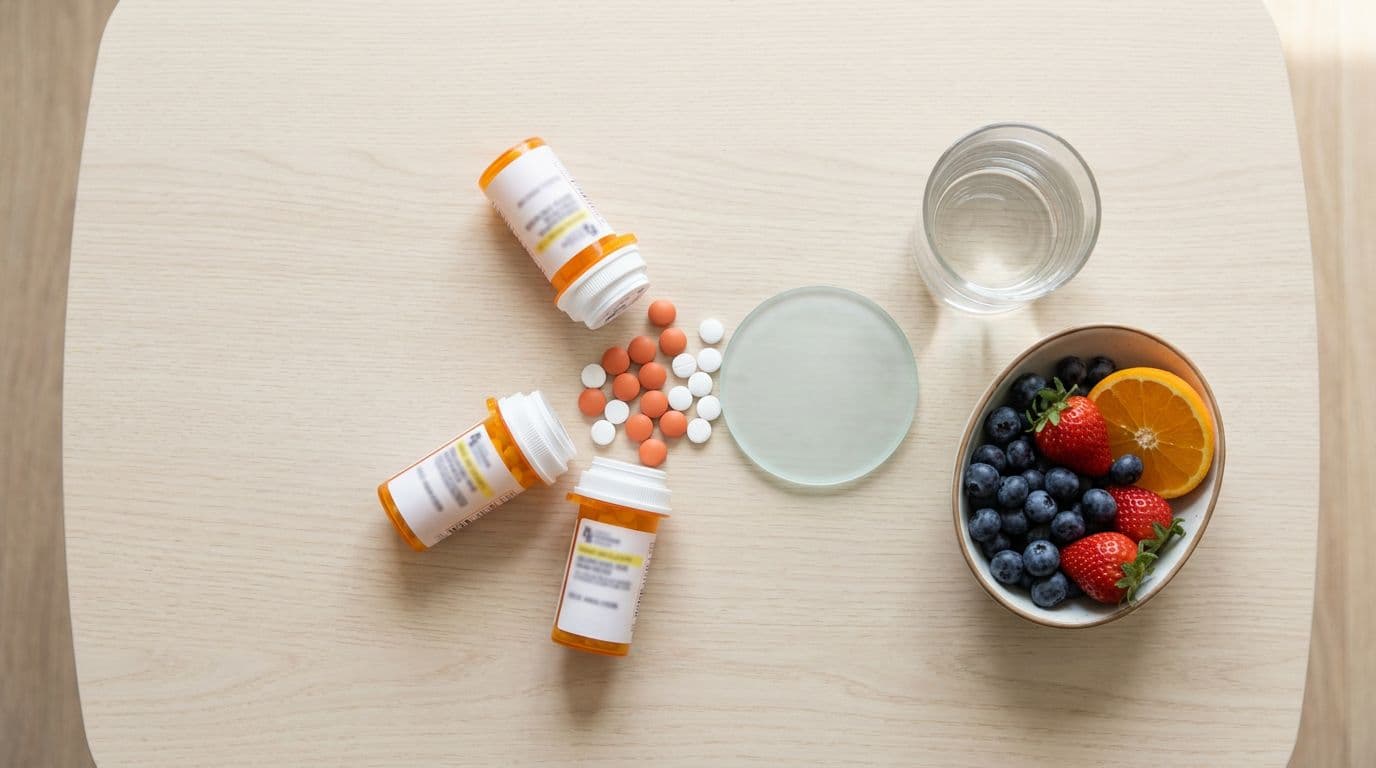 Practical habits and smarter choices can lower ulcer risk, created with AI.
If you use pain medicine once in a while, you may only need a few smart habits. If you need it often, prevention matters even more. This is general education, so check with a clinician for personal advice, especially if you have risk factors.
Safer ways to use painkillers (dose, timing, and smart swaps)
A few rules cut down ulcer risk without turning pain relief into a chemistry project:
- Use the lowest effective dose for the shortest time.
- Don't take two NSAIDs at once (for example, ibuprofen plus naproxen).
- Avoid alcohol while using NSAIDs, since it can irritate the stomach and raise bleeding risk.
- If the label allows, take NSAIDs with food or milk to reduce irritation (it doesn't "prevent" ulcers, but it can help symptoms).
- Consider acetaminophen for certain pains when appropriate, and stay within label limits.
Also, don't ignore non-drug options. Ice or heat, gentle movement, stretching, physical therapy, better sleep, and hydration often lower the need for repeat dosing. For some joint pain, topical NSAIDs may help with less whole-body exposure.
If you take aspirin for heart reasons, don't stop it on your own. Ask the prescriber first.
When stomach protection medicines help, and when to ask about testing for H. pylori
If you're high-risk and must take an NSAID, clinicians often add a PPI (proton pump inhibitor) like omeprazole to lower stomach acid and reduce ulcer complications. Research reviews also describe PPIs as a main strategy for preventing NSAID-related GI injury in higher-risk patients, along with careful risk assessment and medication choices (see this review on NSAID GI complication prevention).
It's also smart to ask about H. pylori testing if you've had an ulcer before or expect long-term NSAID use. Treating H. pylori can lower ulcer risk in the right setting.
Contact a clinician or pharmacist if you need NSAIDs more than a few days often, you're over 65, you have ulcer history, or you take blood thinners, steroids, or antiplatelet meds.
Conclusion
Painkillers can be helpful, but some types raise ulcer risk for a clear reason: NSAIDs weaken the stomach's protective lining. That risk climbs with age, ulcer history, higher doses, longer use, and certain medication combos. To protect yourself, stick to the lowest dose for the shortest time, avoid mixing NSAIDs, and ask if a PPI or H. pylori testing makes sense when you're higher risk. Above all, read labels and talk with a clinician or pharmacist if you use these meds often, and get urgent care for any bleeding warning signs.
FAQs
Which painkillers cause ulcers most often?
NSAIDs cause most painkiller-related ulcers, especially aspirin, naproxen, and ibuprofen.
Can ibuprofen cause an ulcer in a week?
Yes, it can, especially at high doses or if you already have risk factors.
What is a silent ulcer?
It's an ulcer with few or no symptoms until a complication like bleeding occurs.
Is Tylenol safer for the stomach?
Usually yes, because acetaminophen is not an NSAID, but it can harm the liver if overused.
Should I take omeprazole with naproxen?
Some high-risk people need that kind of protection, but a clinician should guide it.
Can I take NSAIDs with food?
Often yes, and it may reduce stomach upset, but it doesn't fully prevent ulcers.
What foods help an ulcer heal?
A balanced, non-irritating diet helps, but ulcers often need medical treatment, especially if H. pylori is involved.
What are signs of a bleeding ulcer?
Black tarry stools, vomiting blood or coffee-ground material, weakness, fainting, or shortness of breath.
Does H. pylori matter if I use NSAIDs?
Yes, it can add risk, so testing and treatment may help in long-term NSAID users.
What pain relief options are safer for chronic pain?
Depending on the cause, options may include acetaminophen, topical treatments, physical therapy, targeted exercises, and clinician-guided medications.
What's Your Reaction?
 Like
2
Like
2
 Dislike
0
Dislike
0
 Love
0
Love
0
 Funny
0
Funny
0
 Angry
0
Angry
0
 Sad
0
Sad
0
 Wow
0
Wow
0



![Richinfaith - Baba Show Me the Way [feat. Romke]](https://spotivik.com/uploads/images/202603/image_140x98_69aa967857bf1.webp)